Blog

Stop losing money in translation—understand what you're really signing up for.
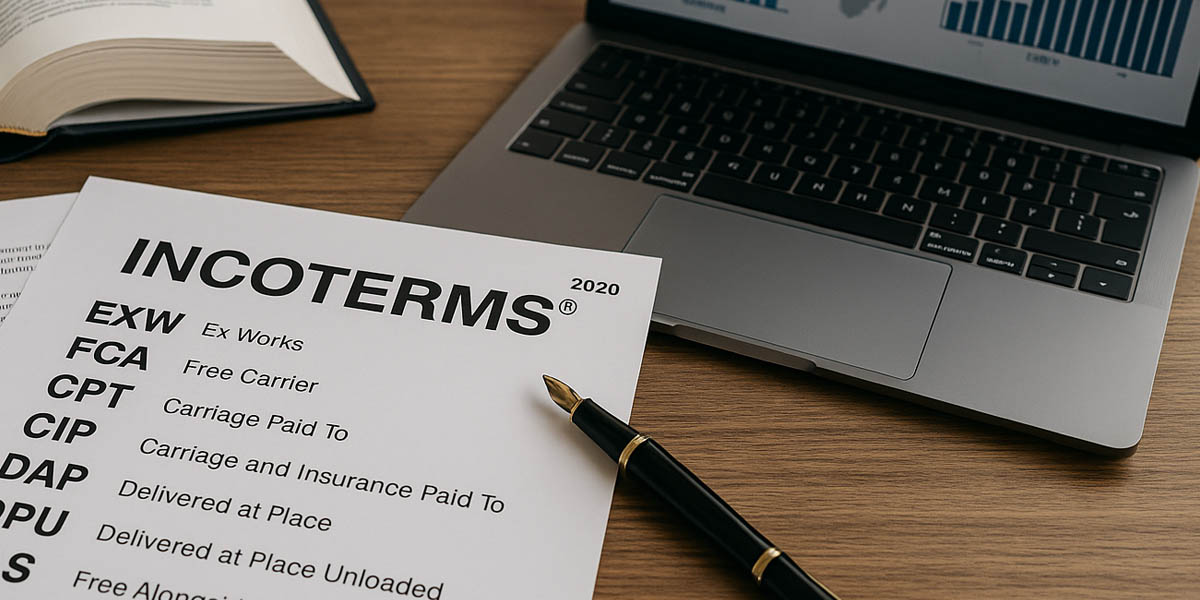
In global trade, a single three-letter term can make or break your margins. Welcome to the world of Incoterms® 2020 - a place where ambiguity is expensive, and precision is power.
Yet despite their critical role in contracts and logistics, Incoterms remain some of the most misunderstood elements in international trade. Misuse leads to delays, surprise fees, compliance headaches - and at worst, full-blown disputes.
Let’s unpack the worst offenders, the classic mistakes, and how to choose the right terms with confidence.

The Most Misunderstood Incoterms
1. FOB & CIF — Overused, Misapplied
Free on Board (FOB) and Cost, Insurance, Freight (CIF) are sea-legends—literally. They’re meant strictly for non-containerized shipments by sea or inland waterway. Yet, they're wrongly slapped on airfreight, road cargo, and containerized goods, setting the stage for chaotic handovers.
Risk: If you're using FOB/CIF for containers, you’re likely misunderstanding the risk transfer point—usually when the container enters a terminal, not when it’s loaded onboard. Use FCA, CPT, or CIP instead.
2. EXW — Simplicity with a Sting
Ex Works sounds easy—seller places goods at disposal, buyer takes it from there. But in reality, EXW can be a minefield for buyers unfamiliar with export customs procedures. It places maximum responsibility on the buyer, often unfairly.
Risk: Sellers may unknowingly expose buyers to customs snags, and buyers might fumble with local rules they don’t fully understand.
3. DDP — The Over-Promise
Delivered Duty Paid seems like a customer service dream: the seller handles everything. But this comes with a hard reality—handling import duties, taxes, and local bureaucracy in a foreign country.
Risk: Sellers may face legal barriers or incur fines if they don’t understand the buyer's country's rules. Without local representation or tax clarity, DDP can spiral out of control.
4. Mistaking Risk for Ownership
Here’s the kicker: Incoterms allocate cost and risk, not ownership. Yet many still believe these rules decide when title transfers. That’s a separate contractual matter entirely.
How to Choose the Right Incoterm
Here’s your battle-tested checklist:
✅ Match the Transport Mode:
Use FOB/CIF only for bulk sea freight. For containers, air, or land, go with FCA, CPT, or CIP.
✅ Gauge Your Partner’s Trade Experience:
EXW suits seasoned importers. DDP is safer for newer ones—if you, the seller, can handle foreign compliance.
✅ Factor in the Cargo Type:
Perishables? High-value goods? Choose terms with defined insurance responsibility and tight handover control.
✅ Be Specific:
Don’t just say “FCA Hamburg.” Say “FCA Hamburg, Hansaport Terminal, Gate B.” Clarity avoids disputes.
✅ Align Customs and Insurance Responsibilities:
Know who files what. Don’t assume your partner will handle what isn’t in writing.
✅ Stay Legally Aligned:
Ensure your chosen Incoterm doesn’t contradict national trade regulations—especially on customs representation.
Final Word
Choosing the wrong Incoterm isn’t just a paperwork problem—it’s a strategic failure. In today’s global supply chain, that can cost you days, dollars, and your reputation.
Mastering Incoterms® 2020 means fewer disputes, tighter contracts, and a smoother path across borders.
Because in trade, clarity isn’t optional—it’s everything.